
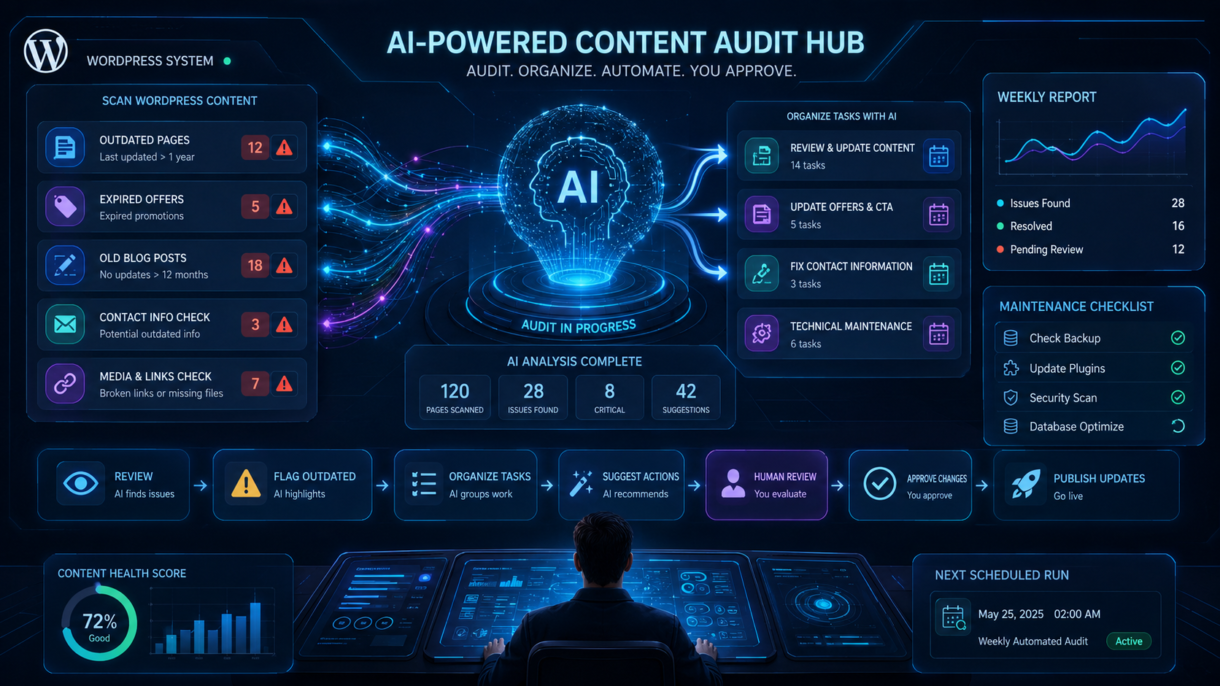

Artificial intelligence is beginning to play a role in many everyday WordPress tasks. Its real value does not lie in impressive promises, but in its ability to reduce repetitive work, organize information, and prepare actions that can then be reviewed and controlled by the site administrator.
When AI is connected to automation tools, it can act as an assistant between WordPress, an online store, email, and other platforms. Services such as n8n are one possible solution for creating these connections, though they are not the only option. The important part is to ensure that each workflow has clear boundaries and requires human approval.
Safer Support for WordPress Maintenance
Plugin updates are essential, but they are not always risk-free. A new version may affect compatibility with the theme, other plugins, or custom website features. AI can help organize the update process by suggesting which plugins should be upgraded first and which ones require closer attention.
Instead of automatically updating all plugins at once, a controlled sequence of actions can be created. For example, AI can recommend updating one plugin at a time, checking key pages, and proceeding only if no issues appear. At the same time, it can confirm that recent backups are available.
The final decision should not be carried out without supervision. The site owner or technician needs to approve the changes, especially when they involve critical plugins, an online store, or payment functionality.
Product Content, Articles, and SEO
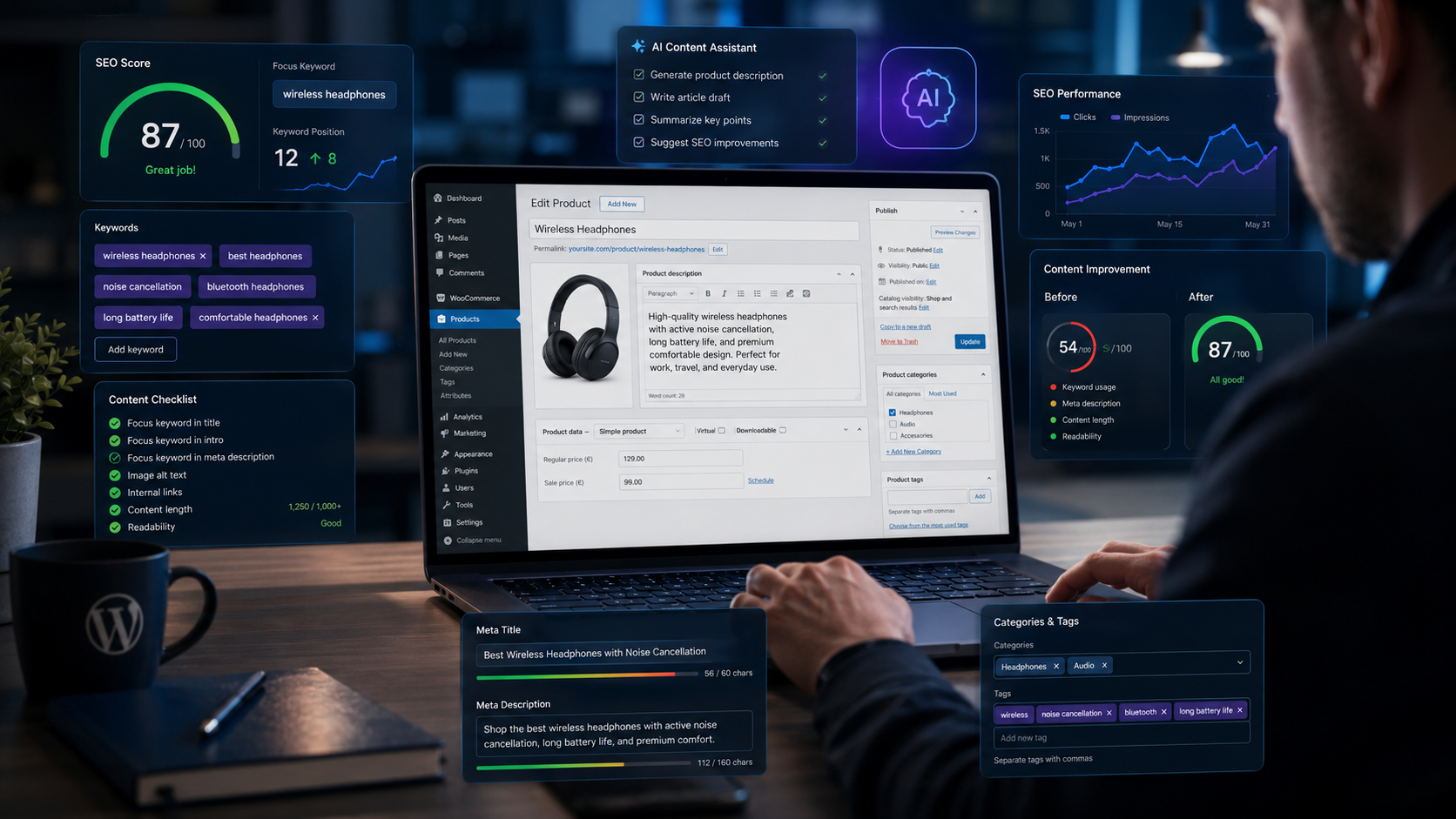
In a WooCommerce store, updating product descriptions can require many hours of work. AI can prepare new product summaries, detailed descriptions, alternative wording, and suggestions for presenting features more clearly. It can also identify content that is too brief, repetitive, or outdated.
The same applies to articles. AI can create drafts, suggest titles, SEO meta descriptions, relevant categories, and sections that may need updating. This allows the writer to begin with an organized foundation instead of a blank page.
However, product descriptions and articles affect the company’s image and the website’s credibility. For this reason, the content should always be reviewed before publication, so that inaccuracies, exaggerated claims, incorrect product details, or information that does not match the company’s tone can be corrected.
Email and Customer Communication
Email management is another area where AI can save time. It can categorize messages, identify the main request, and prepare a response based on previously approved information, such as business hours, return policies, or frequently asked questions.
In more organized workflows, a request submitted through a contact form can be transferred to a task management system along with a suggested response. The administrator can review the conversation history, edit the text, and decide whether it should be sent.
Sending messages automatically without review can be risky, especially when they involve complaints, financial matters, personal data, or specific order terms. AI can prepare the draft, but a person should decide what is ultimately sent.
Reviewing Outdated Content and Repetitive Tasks
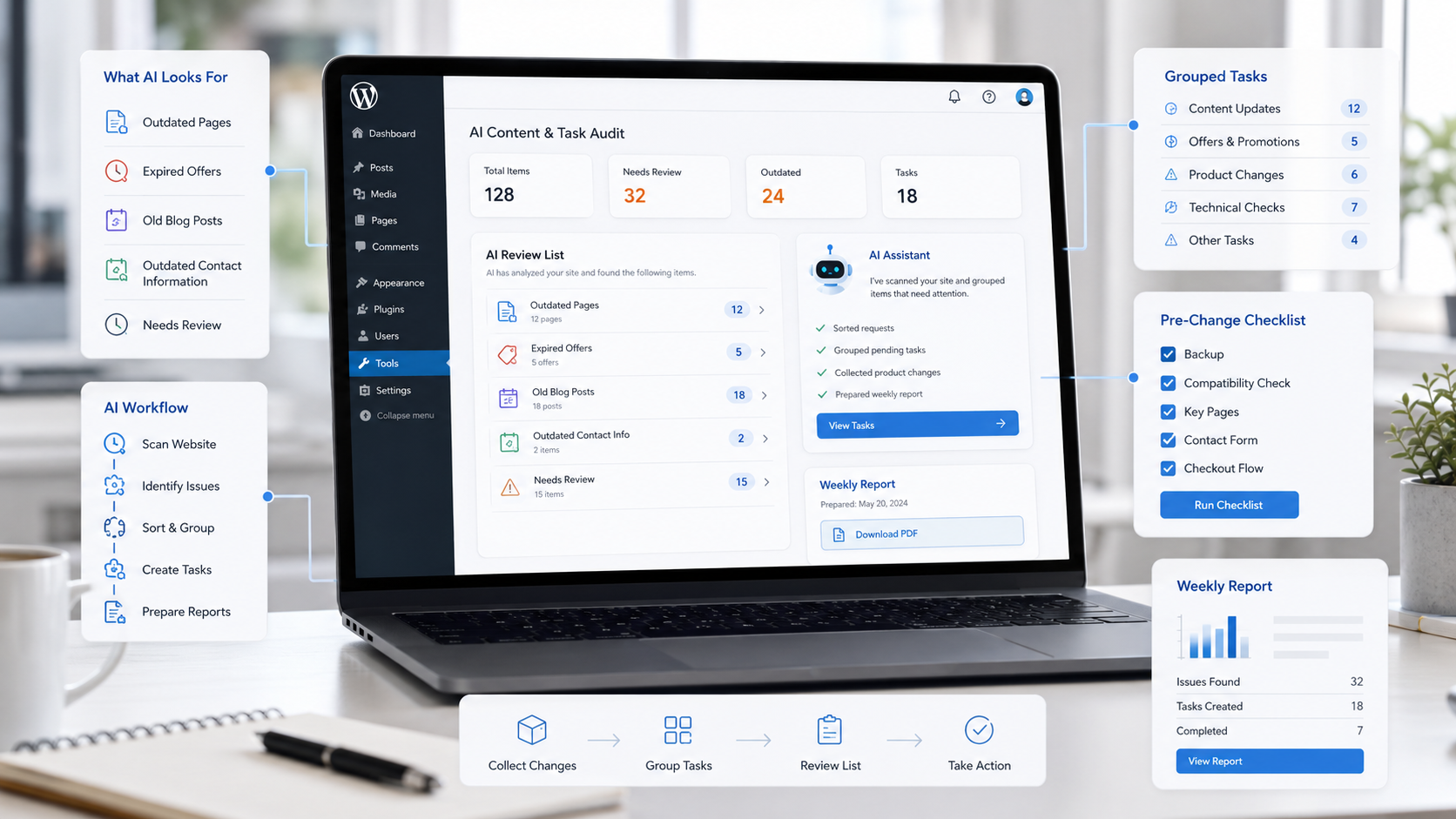
Over time, a WordPress website accumulates old pages, expired offers, outdated contact details, and articles referring to services or versions that are no longer available. AI can help identify these areas and create a list of content that needs to be reviewed.
It can also organize repetitive administrative tasks, such as categorizing requests, collecting product changes, preparing weekly reports, or grouping pending tasks. It does not replace WordPress or management tools, but it can reduce the amount of information that needs to be transferred manually.
Creating checklists before applying a change can be especially useful. For example, AI can remind the administrator to check backups, compatibility, key pages, contact forms, and the purchasing process. This helps reduce errors that can occur when changes are made in a hurry.
The Right Balance Between Automation and Control
The safest approach is for AI to prepare, suggest, and create drafts. Important actions should wait for approval, including publishing an article, updating a plugin, changing a product, sending an email, or modifying content that affects customers.
Clear permissions are also essential. A system that reviews content does not necessarily need publishing access, while a tool that recommends updates does not need permission to install them automatically. The more limited the access, the lower the risk.
AI can become a valuable assistant for a WordPress website, provided it is used with realistic expectations. It should not act as an uncontrolled replacement for the site owner. Its best use is to organize work, reduce preparation time, and leave the final responsibility with a person.